North Carolina Process Server
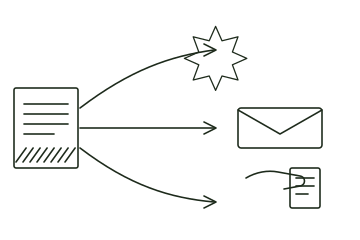
How a North Carolina process server order works

Sheriff delivery for state-court summonses
We assemble the package the sheriff needs: the summons, copies for each person, the complaint and attachments, and the return form. We send it to the sheriff of the county where the person lives or works, which may not be the county where you filed. Several sheriffs post their own rules. Wake will not serve a post office box, for example, and wants a stamped envelope for each eviction defendant. The sheriff's $30 per person is set by statute and is paid to the sheriff, separately from our price.

Certified mail and signature confirmation
For an individual, Rule 4(j)(1) accepts registered or certified mail with a return receipt, USPS signature confirmation, or a delivery service approved under 26 U.S.C. 7502(f)(2). Corporations, partnerships and public bodies have mail and courier options but no signature-confirmation option. We prepare and send the mailing and send you the receipt or USPS proof of delivery. Then the serving party, you or your attorney, signs the affidavit that G.S. 1-75.10 requires before a default judgment.

Personal delivery
Subpoenas in any North Carolina court, federal summonses (FRCP 4(c)(2)), North Carolina papers served in another state, summonses the sheriff has already returned unserved, and notices that are not court process. In these cases a private person can deliver the papers, and we assign an independent server. The server signs an affidavit showing time, place, manner and the server's qualifications (G.S. 1-75.10(a)(1)b).
- Upload the papers and say who is to be served and where.
- We pick the route the rule allows for those papers.
- We hand the package to the sheriff, the post office or a server.
- You receive the return: the sheriff's return, the mail receipt or the server's affidavit.
Who May Be a Process Server in North Carolina
In many states you hire a private server and that is the whole story. North Carolina is stricter about the first paper in a lawsuit. Rule 4(a) of the North Carolina Rules of Civil Procedure says that inside the state, the summons and complaint go to "the sheriff of the county where service is to be made or some other person duly authorized by law." A private person steps in only in two situations. Either the clerk appoints one because no officer is available, the officer will not act, or the officer's return shows the summons could not be served, or the papers are not a state-court summons at all.
So we do not sell "a process server for your summons" as if the sheriff were optional. We sell the routes the rules actually provide, and we tell you which one we used. Why the sheriff goes first is explained in the sheriff-first guide.
Deadlines that decide how early to order
- 60 days. A summons must be served within 60 days after it is issued (Rule 4(c)). Missing that date does not void it by itself, but the case then has to be kept alive.
- 90 days. Keeping it alive means an endorsement or an alias or pluries summons within 90 days of issue (Rule 4(d)). The clerk charges $15 for each. Without one, the case is discontinued as to that defendant (Rule 4(e)).
- 7 days. An eviction (summary ejectment) summons sets a hearing no more than 7 days out, not counting weekends and holidays (G.S. 42-28). That is why eviction papers stay with the sheriff. See eviction papers.
- 10 days. A person served with a subpoena has 10 days to object, or less if the compliance date is sooner (Rule 45(c)(3)). See subpoena service.
Process Server NC Turnaround and How to Reach Us
Standard $132, Rush $171, 24-Hour $228 per person served; a North Carolina state-court summons adds $111 per person.
For an order already placed, reply to your confirmation email with the case number; to start one, use the order form. The tiers set how fast we hand your papers off: Standard aims for 5 business days after a complete order, Rush for 2, and 24-Hour for one business day. These are targets, not promises.
Upload papers and choose a speed
Start an orderProcess Servers North Carolina: Common Answers
- Who serves a summons in North Carolina?
The sheriff of the county where the person will be served, or another person duly authorized by law (Rule 4(a)). That county is often not the one where the case was filed. A Charlotte lawsuit against someone in Greensboro goes to the Guilford sheriff.
- When can a private person serve a North Carolina summons?
There are two cases. First, after a proper officer returns the summons unexecuted, the plaintiff may have it served by anyone 21 or older who is not a party and not related by blood or marriage to a party or to the person served (Rule 4(h1)). Second, the clerk may appoint a suitable person when no officer is available, the officer refuses or neglects to serve, or the officer is interested in the case (Rule 4(h)). Neither route applies to eviction summonses.
- Does North Carolina license process servers?
What North Carolina controls is who may serve each kind of paper, through Rule 4 and Rule 45. The private protective services statute, G.S. 74C-3, does not mention service of process.
- Can I serve papers by mail in North Carolina?
Yes, for most defendants. An individual can be served by registered or certified mail with a return receipt, a designated delivery service, or USPS signature confirmation, as long as the papers reach the addressee (Rule 4(j)(1)). Corporations and partnerships can be served by registered or certified mail or a delivery service, but signature confirmation is not listed for them. Email is not allowed (Rule 4(j6)).
- Who signs the affidavit when you send the papers by certified mail?
The serving party. G.S. 1-75.10(a)(4) calls for the serving party's affidavit with the receipt attached. We mail the papers and send you the green card or the USPS proof of delivery. You or your attorney then file the affidavit before asking for a default (Rule 4(j2)(2)).
Where North Carolina Process Servers Deliver Most Often
The courthouses, state offices and cities behind most of our orders. Each link opens the page's own address, hours and sheriff or clerk detail.
Busiest North Carolina courthouses
- Mecklenburg County Courthouse process server, Charlotte
- Wake County Courthouse and Justice Center, Raleigh
- Guilford County courthouses, Greensboro and High Point
- Durham County Courthouse floor guide
- Forsyth County Sheriff civil process, Winston-Salem
- Cumberland County Courthouse, Fayetteville
- Eastern District federal courthouse, Raleigh
- Middle District federal courthouse, Greensboro
- Western District federal courthouse, Charlotte
State offices that accept service in North Carolina
- North Carolina Secretary of State service of process
- Secretary of State service checklist and rejections
- Commissioner of Insurance service of process
- DMV Commissioner nonresident motorist service
- Serving a North Carolina state agency under Rule 4(j)
Largest North Carolina cities we serve
- Charlotte process server, Mecklenburg County
- Raleigh process server, Wake and Durham counties
- Greensboro process server, Guilford County
- Durham process server, Durham County
- Winston-Salem process server, Forsyth County
- Fayetteville process server, Cumberland County
- Cary process server, Wake and Chatham counties
- Wilmington process server, New Hanover County
- High Point process server, Guilford and Davidson counties
- Concord process server, Cabarrus County
- Greenville process server, Pitt County
- Asheville process server, Buncombe County
- All 100 North Carolina counties, the county hub
North Carolina Process Server Coverage by County
Each page covers that place's courthouse, its sheriff's posted rules, the federal district, and any county lines the town crosses. For example, part of Cary lies in Chatham County, and part of High Point lies in Davidson County.
Wake County
the sheriff's written rules, including no PO-box service and a $100 fee for papers from other states since July 2025.
Mecklenburg County
the East Fourth Street courthouse, Portal records, and the Western District.
Guilford County
two courthouses with 24-hour drop boxes, and the sheriff's December 2025 move to W. Sycamore St.
Forsyth County
a posted $50 out-of-state fee and a $5 advance fee on mobile-home writs.
Durham County
the clerk's priced eviction packet and the Butner federal exception.
Cumberland County
the Braswell courthouse on Dick Street in Fayetteville, Fort Bragg, and an unstaffed federal office.
New Hanover County
the Princess Street courthouse in Wilmington, a PO Box with its own ZIP, and beach-rental evictions.
Buncombe County
the Court Plaza courthouse in Asheville, and federal court on Otis Street.
Gaston County
the Gastonia courthouse on Dr. Martin Luther King Jr. Way, Suite 1004, and thirteen towns.
Union County
the Union County Judicial Center in Monroe, a magistrate at the jail on Presson Road, and fast-growing suburbs.
Cabarrus County
the Union Street South courthouse in Concord, and a Kannapolis that runs into Rowan.
Johnston County
the Smithfield courthouse on East Johnston Street, and Clayton's growth on the Wake line.
All 100 counties
Every county hub, town page and courthouse page.
Papers for any of the other counties are handled the same way: a summons goes to that county's sheriff, and the mail and hand-delivery routes work statewide.
Resources before you file
- Process Servers and Certified Mail in North Carolina
- Divorce Process Server Options and Costs in NC
- Eviction Papers Landlords Serve in NC
- Wage Garnishment Papers Served in NC
- How Process Servers Work in North Carolina
- Landlord Notice Service in North Carolina
- Process Server Cost in North Carolina
- When the NC Sheriff Can't Serve Your Papers
- Process Server NC for Gated Buildings
- Serve Papers on a Military Base in NC
- Serve Papers in North Carolina on an Estate
- Serve an Inmate in North Carolina
- Small Claims Service by Mail, Sheriff or Server in NC
- Why NC Subpoena Service Gets Rejected
- North Carolina service rules and fees in one table
We arrange delivery. We are not lawyers, and nothing here is legal advice about your case. If you are unsure which papers to serve or how, ask the clerk's office that issued them or an attorney.